Doesn’t supermundane sound soooo boring? Actually it means out of this world or superior to earthly things. And that makes it jolly difficult to illustrate.
This is Arbroath Abbey. We enjoyed our visit there very much – definitely closer to super than to mundane.
I hadn’t come across the word poddle, until writing buddy Sharon Bee used it in connection with my character police officer Trevor Harris, who is the lead character in the fourth book in my Little Mallow cosy mystery series . Distracting Crimes and Romantic Proposals in Little Mallow will be out later this year.
Sharon says that Trevor seemed to ‘poddle along‘. I guessed the word meant to be relaxed, unstressed, not particularly hurried or dynamic. That’s because of how Trevor was behaving in the scene Sharon was commenting on. We were both right. Poddle means to travel or move in a leisurely manner, and Trevor is more than capable of that! He has many good qualities and can be brave, quick thinking and decisive when needed, but you’re not likely to mistake him for Jack Reacher or James Bond. That makes him a good fit for a series which is more in the style of Agatha Christie than Karin Slaughter.
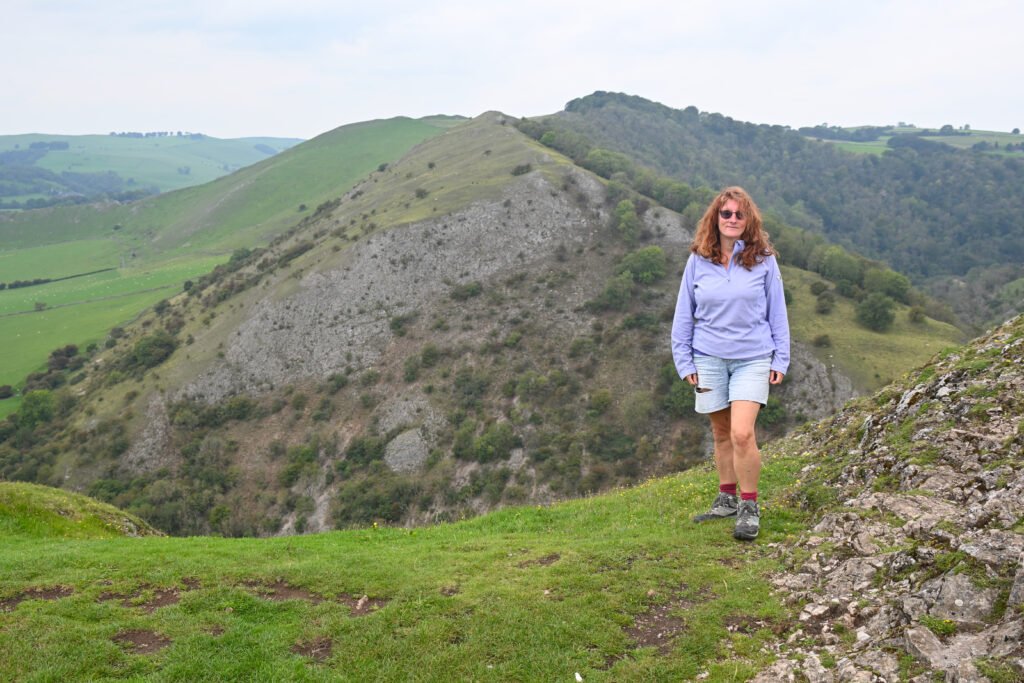
Oddly I couldn’t find a photo of Trevor, so here’s one of me poddling in the Lake District. Have you ever poddled?
Btw there’s a river Poddle in Ireland. I wonder if it’s fast flowing?
Dressed is the past tense of dress or dressing. Most of these words are connected with putting things on – a person wearing clothes is dressed, as is a salad sprinkled with balsamic vinegar and olive oil. Gardens can be dressed with compost or fertiliser, a Christmas tree with baubles, or a graze with a plaster.
We can get dressed up in our smartest clothes, or give a dressing down to those who didn’t make the effort. If we really want to get things right, we may even have a dress rehearsal.
Stone and meat can both be dressed – in these cases it means trimmed to get them ready for cooking or building.
Lots of things can be dressed up in an attempt to make them seem better. For example I’ve dressed up this post to look informative, rather than an advert for my short story collection, Dressed To Impress. Here’s the blurb –
We choose our clothes to help us stand out, make a statement, or to hide inside. They may show who we really are or be our disguise. Perhaps they’ll help us play a part, get the job done, or be a means for revenge.Clothes can warm, comfort and reassure us. We might buy or borrow them, damage or repair, give them away or have them taken. The items in our wardrobe might bring back memories, express hope for the future, or offer a surprise.From glasses to shoes, fancy dress to fancy dresses, designer wear to charity donations, the clothes we wear all have a story to tell. This book contains 24 of them.
You can get the book as ebook, paperback, or through kindle unlimited here, request at your library, order in bookshops, or buy paperbacks direct from the printer here.
Wallpaper is, of course, paper sold to stick on walls to make them look pretty, or cover cracks, or both. Oddly I haven’t got a single photo of wallpaper. Here’s some fancy panelling (at Bolsover castle). It’s a wall covering and made from the same stuff as paper …
Wallpaper can also mean an unobtrusive background, often background noise.
I don’t recall every coming across wallpaper as a writing term until it appeared in a lovely review of Firestarter a while back. Ooops, I got two in the screenshot!
In this context wallpaper means background, setting or location. It can form an important part of the story, or just be there to stop the reader feeling the action happening in a void.
Industry is a type of trade or manufacture, it can also refer to trade and manufacture collectively. Those things will often happen in an industrial environment. Industry may also mean great activity or diligence. Those who demonstrate this are industrious.
Publishing is an industry. We don’t always like to think of it that way, but it is. In common with most other industries money is the main driving force. It’s often not the only one, but it’s very important. If (for example) a magazine doesn’t sell enough copies to buy more paper, it can’t print the next issue.
If my books don’t sell, I won’t be able to afford the cake needed to fuel me as I write the next one. You wouldn’t want me to go without cake, would you?
Shrift is a very old word for the penance given by priests after a person made a confession. It later came to mean the confession itself, although even that is now outdated. I believe you can still be shriven, but haven’t attempted that myself. When prisoners where sentenced to death (In Britain) they were permitted to confess their sins to a representative of the church, just before execution. They weren’t given much time, so it was just a short shrift. Since then, the phrase has come to mean to swift dismissal or brush off. Sometimes the phrase is written short thrift, but that’s not correct. At least at the moment – as I think this post makes clear, words and their meanings can change. As it’s the whole phrase which has been repurposed, not just a single word, no alternative lengths of shrift are now available. I looked into all this, because while doing the (hopefully) final rewrite of the fourth book in my Little Mallow cosy mystery series, I used the term. When Mike attempts to visit Ellie in hospital, outside visiting hours, he’s given short shrift by the nurses. I don’t recall ever writing the phrase before, so wanted to check I had it correct. And then I got distracted. Not for the first time!
By the way, if you don’t already know where Little Mallow is, you can find out in a special issue of the Little Mag, which is the village’s community newsletter. As well as directions, there are short stories and a cake recipe.
Doesn’t supermundane sound soooo boring? Actually it means out of this world or superior to earthly things. And that makes it jolly difficult to illustrate.
I’ve been adding a few Scottish words to my vocabulary during my travels. Guddle means a mess and/or a complex and confusing situation.
A guddle is also a type of fish which can be caught by guddling. The guddling is done with bare hands so quite messy and the word apparently derives from making a mess around water – which is handy for me, as have plenty of photos of various watery subjects in Scotland.
Correctitude means correctness and especially concise correctness of conduct. That’s a pleasingly alliterative phrase, but not somehing I feel able to demonstrate photographically. Or at all.